
AI is changing how software is built, but it has not made software outsourcing obsolete. Instead, it is changing what businesses expect from their technology partners. Companies are no longer looking only for lower development costs. They want faster delivery, stronger engineering practices, and teams that know how to use AI responsibly. As a result, software outsourcing to Vietnam continues to attract global businesses, entering a new phase shaped by talent, product thinking, and AI adoption.
1. AI is changing software outsourcing, not replacing it
For years, software outsourcing was mainly associated with cost savings. Businesses outsourced projects to access technical talent, scale development teams, and accelerate product delivery. Today, AI is changing that equation.
Tools for code generation, testing, documentation, and debugging have improved rapidly. While these technologies can significantly increase productivity, they cannot replace the human elements of software development. AI currently cannot reliably understand business goals, align stakeholders, or make architectural decisions that balance speed, scalability, security, and maintainability.
In practice, for many organizations, AI is reducing repetitive work rather than replacing software teams. This is why outsourcing remains relevant, even as AI adoption continues to grow.
1.1. Clients expect more than development capacity
The questions clients ask today are different from those they asked a few years ago. Instead of focusing solely on hourly rates and team size, businesses increasingly want to know how outsourcing partners use AI, ensure code quality, and accelerate delivery without introducing unnecessary risks.
This shift reflects a broader trend across the industry. Many companies are moving beyond buying development hours. They are looking for partners that can help them achieve business outcomes.
1.2. Engineering expertise matters even more
There is a common belief that AI will reduce the demand for software engineers. However, many organizations are discovering the opposite.
AI-generated code still needs to be reviewed, tested, and maintained. Poor implementation can introduce security issues and technical debt. As a result, businesses continue to value engineers who can think critically, understand customer needs, and make sound technical decisions.
The companies most likely to succeed in the AI era will be those that combine experienced engineering teams with effective AI-assisted workflows.

2. Why Vietnam remains a strong outsourcing destination
Vietnam is widely recognized as one of Asia’s leading outsourcing destinations. Its combination of technical talent, competitive costs, and international experience continues to make it attractive to businesses worldwide.
2.1. Strong talent and international experience
Vietnam has a growing technology workforce with experience across industries such as healthcare, finance, education, e-commerce, and enterprise software. Many Vietnamese engineers have spent years working with clients from North America, Europe, and Australia, giving them valuable experience in distributed teams and global delivery practices.
This combination of technical capability and international exposure remains one of Vietnam’s biggest advantages.
2.2. Cost still matters, but value matters more
Competitive pricing remains an important reason companies outsource to Vietnam. However, businesses are increasingly evaluating value rather than cost alone. A smaller team using AI effectively may deliver better results than a larger team that relies entirely on traditional development processes. This is why software outsourcing is gradually moving beyond a transactional relationship.
Increasingly, clients are asking a different question: Who can help us build the right product faster and with less risk?
2.3. Vietnam is adapting quickly to AI
Vietnam’s technology sector has shown a strong ability to adopt new technologies. Across the industry, companies are integrating AI into software development, testing, documentation, and project management.
This adaptability is important because the future of outsourcing will likely belong to teams that can combine human expertise with AI-assisted delivery. For Vietnam, AI is not a threat. It is an opportunity to move further up the value chain.
3. What businesses should look for in an outsourcing partner
As software outsourcing evolves, businesses should evaluate potential partners based on more than pricing.
3.1. Engineering quality
AI can improve productivity, but quality remains essential. Businesses should look for partners with strong engineering practices, clear coding standards, and robust testing processes. Fast delivery has value only if the resulting software is secure, reliable, and easy to maintain.
3.2. Product mindset
Many software projects struggle because teams focus on building features rather than solving business problems.
Outsourcing partners with a strong product mindset can help businesses prioritize effectively, identify risks early, and make better decisions throughout the development process. As AI reduces time spent on routine tasks, product thinking will become an even more important differentiator.
3.3. Responsible use of AI
AI should be treated as a capability rather than a marketing message. Businesses should understand how their partners use AI, review AI-generated code, and protect sensitive information.
Companies that can explain their AI practices clearly are often better prepared for the future of software development.
4. The rise of AI-powered software partners
Traditional outsourcing firms focused on providing development capacity. Increasingly, businesses are looking for partners that can help them innovate faster while maintaining quality. This has contributed to the rise of AI-powered software organizations. These companies combine engineering expertise, AI-assisted workflows, and product thinking to deliver better outcomes. Their goal is not to replace developers with AI, but to help development teams spend more time solving meaningful problems.
For clients, this can mean shorter development cycles, improved collaboration, and greater confidence in the final product.
5. How PowerGate Software reflects this shift
Vietnam’s software industry is already adapting to these changes, and PowerGate Software is one example of that evolution.
Founded in 2011, PowerGate Software has delivered more than 200 projects across industries including healthcare, finance, education, and enterprise software. Today, the company describes itself as an AI-powered software product studio, incorporating AI-assisted development practices alongside its engineering and product consulting services.
With ISO 9001:2015 and ISO 27001:2022 certifications, a strong record of long-term client relationships serving international clients, PowerGate Software reflects a broader trend within Vietnam’s technology sector: businesses increasingly expect outsourcing partners to deliver strategic value, not just software.
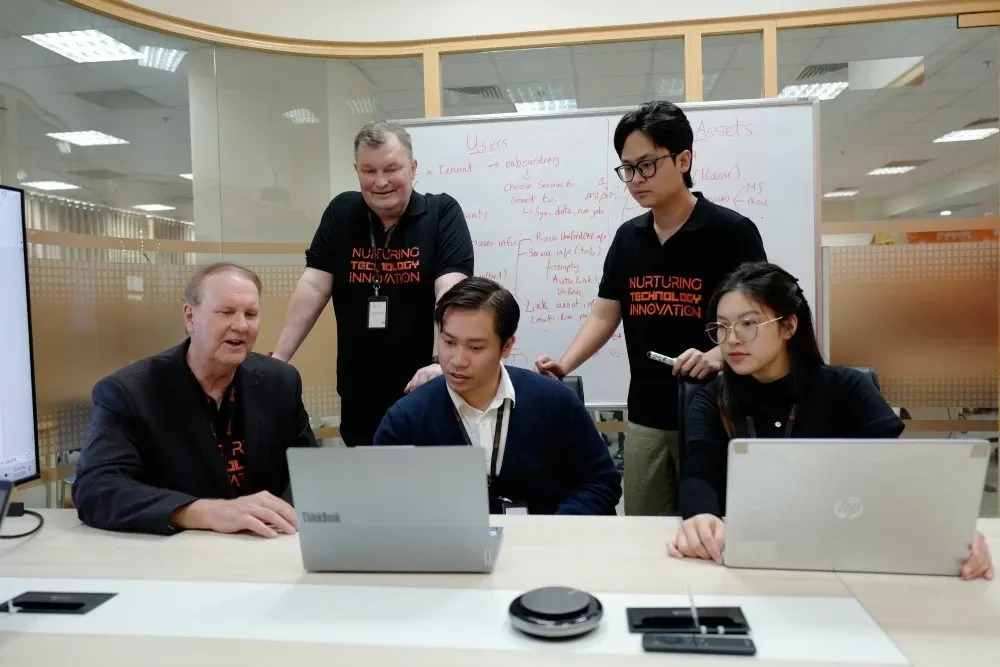
PowerGate Software is a global AI-Powered software product studio with a strong product mindset
Software outsourcing to Vietnam remains highly relevant in the AI era, but client expectations are changing. While competitive costs continue to matter, businesses are increasingly prioritizing engineering quality, product thinking, and responsible AI adoption. As the industry evolves, software outsourcing to Vietnam is becoming less about reducing costs and more about building strategic partnerships that create long-term value.